To most of the world, blogging is a joke.
It isn’t a career. It isn’t a way to make money. It isn’t a tool for changing the world.
It’s a hobby, a diversion, a fad that’ll come and go. Sure, you can start a blog, but don’t count on it to make you any money. That’s just silly.
Try telling your family or friends or coworkers you want to quit your job and make money blogging. They’ll smile politely and ask, “Does anybody really make money from that?”
Ye, they want you to have dreams. Yes, they want you to chase them. Yes, they want you to succeed.
But they also want you to be “realistic.”
If you really want to improve your life, you should get an advanced degree, write a book, or even start your own business, not hang all your hopes and dreams on some stupid little blog. Nobody can make money blogging.
Can they?
Well, I’m hesitant to say this, but…
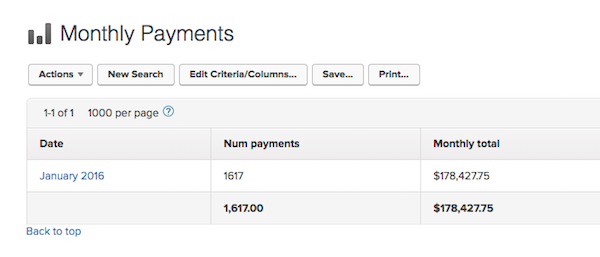
This blog makes over $100,000 per month.
In fact, here’s a screenshot of our sales from January 2016:
Granted, it was a good month. We don’t always make that much money.
But we almost always cross $100,000 in sales.
How?
Well, I’ll tell you. Not because I want to brag (well, maybe a little), but because most of the advice out there about monetizing your blog is complete crap.
For instance, do you see any ads on this site?
No? How about e-books for sale?
None of those either, huh?
There’s a reason why.
How I Learned to Make Money Blogging
Over the past eight years, I’ve had the good fortune to work with some of the
smartest bloggers on the planet. I worked with Brian Clark as he built
Copyblogger to a multimillion dollar brand. Neil Patel and Hiten Shah also hired me to help them launch the KISSmetrics blog, eventually creating a multimillion dollar SaaS company.
Combined, I wouldn’t be surprised if both blogs have earned more than $50 million. In comparison, the $100,000 per month I’ve managed to generate is a pittance.
Want to know how much money you could be making from your blog? Find out with our free
Blog Profit Calculator.
I’ll also be straight up with you… that income is far from passive. For the first several years, I worked 80-100 hours a week, and even now I usually put in at least 60 hours.
The good news?
It’s paid off. If you’ll take some of these lessons to heart, it’ll pay off for you too.
Because here’s the thing:
You’re Not a Fool. You Can Make Money Blogging.
So, you want to make a living teaching other people what you know? Nothing wrong with that.
Professors do it. So do public speakers and best-selling authors.
Getting paid to teach.
Blogging is no different. It’s just the same old models with some rocket fuel thrown in, courtesy of social media.
Come on, How Do Bloggers Really Make Money?
You want specific steps?
Fine.
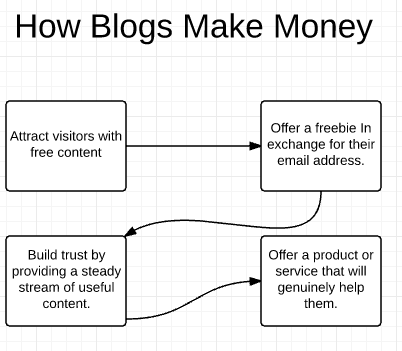
Here’s exactly how to make money from your blog:
- Write content that gets lots of traffic
- Convert visitors into email subscribers
- Send those subscribers content that builds trust
- Sell products or services your audience wants
That’s it. Four steps.
The problem?
It’s freaking hard to do. The process is simple on the surface, but each step is enormously complicated and requires extraordinary skill.
Especially the last one.
For instance, do you want to sell your own products or services? If so, which ones?
Here are just a few of the options:
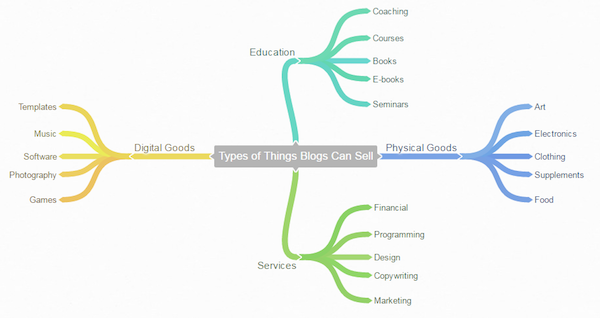
Make money blogging by selling these types of things
Or… what if you don’t have any products and services to sell? What should you do then?
Well, you can also make money blogging by selling someone else’s products and services.
The most conventional (and least profitable) method is selling advertising, where you allow companies to promote their products and services to your audience in exchange for a fee. You can also form partnerships with other companies, promoting their products and services as an “affiliate” and earning a commission each time one of your readers purchases.
Which model should you choose? What should you do?
It’s up to you to decide, but before making your decision, there’s one crucial lesson you need to understand:
You’re Not Just a Blogger
The moment you decide to use your blog to make money, you’re no longer just a blogger. At that moment, you also become an entrepreneur, and your blog becomes a small business.
You’ve probably heard of financial planners giving free seminars to attract clients, right?
Well, blogging is a lot like those free seminars. You’re giving away your expertise and knowledge in the hopes of attracting customers and then gaining their trust.
In other words, if your goal is to make money, your blog is a lead generation mechanism. It also nurtures those leads until they are ready to purchase.
“But Jon,” you say. “This sounds too corporate. I just want to make a few bucks on the side teaching people what I know.”
My response?
Don’t start a blog. In my opinion, it’s a terrible way to make a few bucks on the side.
For one, there’s the time investment. I’ve never seen anyone learn everything necessary to build a profitable blog in less than three years.
For two, there’s the chance of failure. Your first two or three blogs you start will probably fail because you make a fatal misstep.
In other words, it’s exactly like starting a business. Exactly.
Can you get rich?
Sure, that’s why many people are attracted to entrepreneurship. If you start and grow a successful business, you can make millions or even billions of dollars.
But you can also lose everything.
For every entrepreneur who makes millions, there are dozens who invest years of their life into companies that ultimately fail, sometimes bankrupting them in the process. It’s a high risk/high reward lifestyle, and it requires more skill, smarts, and good old-fashioned work than most people can fathom.
I’m not saying that to discourage you. I’m just trying to make sure you have reasonable expectations.
Let me tell you how it happened for me…
My Journey from $0-$100,000 a Month
It took me about five years to earn my first dollar.
During that time, I started four different blogs, working on them at night and on the weekends. The first three failed. Despite investing hundreds of hours into each one, I made too many mistakes, and I eventually had to shut the blogs down. I didn’t earn a penny from them.
And I won’t lie to you… it sucked.
Each time a blog failed, I seriously thought about quitting. I felt like I was putting in all that time and energy for nothing.
But it wasn’t true. I was learning.
Yes, I made a lot of mistakes, but I didn’t repeat them. So, while those first four blogs were all “failures,” each one was also closer to success than the last.
With the fourth blog, everything finally clicked. I was getting 1000 visitors a day within about two months, and I sold it for $10,000. That’s when I knew I was onto something.
From there, I went to work for other big blogs for a few years, helping grow Copyblogger and KISSmetrics into what they are today. Eventually though, I felt the itch to go out on my own again, so I left and started this blog. It now turns a fairly steady $100,000+ a month.
In total, it took me about eight years to get here, but in exchange for investing those eight years, I now have enough money to support me until the day I die. Also, every day I get emails from people telling me how I changed their lives for the better.
So, it was worth it. No question.
But was it easy?
No. It was just as hard as starting any other business.
I did learn a thing or two that might speed along the process for others, though. Below, I’ve recorded a few of those lessons, and I believe some of them might surprise you…
Lesson #2: Start with Affiliate Marketing (or Services)
As I write this, it just so happens that I’m in the initial stages of starting a new blog (more details to be announced soon). It’s in a completely different space where I have no products, so I’ve been pondering the best way to monetize it, and here’s what I think…
Affiliate marketing is the smartest strategy.
If you’re not familiar with the term, it’s a business model where you endorse other people’s products or services in exchange for a commission. On software and information products, affiliates typically earn a 50% commission or sometimes even more, so it can be quite lucrative.
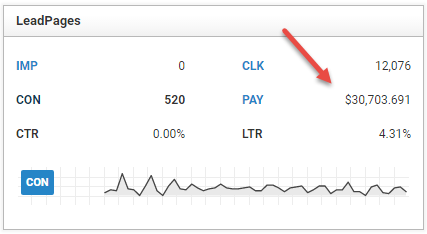
Pat Flynn, for example, makes over $100,000 a month in affiliate commissions. Here at Smart Blogger, we mostly promote our own products, but we also make a tidy sum promoting LeadPages and SiteGround:
Granted, you won’t make that kind of money when your blog is small, but affiliate marketing is still a good way to start for several reasons:
- It’s faster. Instead of investing months or even years creating a product, all you have to do is publish a link on your site. Assuming your audience is engaged, you could be earning commissions within hours or even minutes.
- The income from affiliate marketing is almost entirely passive. You don’t have to worry about creating products, supporting customers, or any of the technical complexity of selling your own products or services. You can also invest the time you save into growing your traffic, leading to more revenue later.
- It can guide future product creation. If one affiliate product sells 10X better than all the others you promote, you might want to think about developing your own version of the product, because you have proof your audience wants it.
Personally, I think the advantages are so enormous that no beginning blogger should consider any other business model… with one exception:
Service providers.
If you are a graphic designer, real estate agent, attorney, or any other type of service provider, you probably want to offer your services on your blog from day one. The profit you make will almost certainly outstrip anything else, at least in the beginning.
Lesson #3: Build the Funnel in Reverse
Even if you’re making fantastic money from affiliate marketing or selling services, chances are you’ll want to try your hand at developing your own product at some point. So, where should you start?
My answer: with blogs, the most profitable price is usually the end of the funnel. Here’s what I mean…
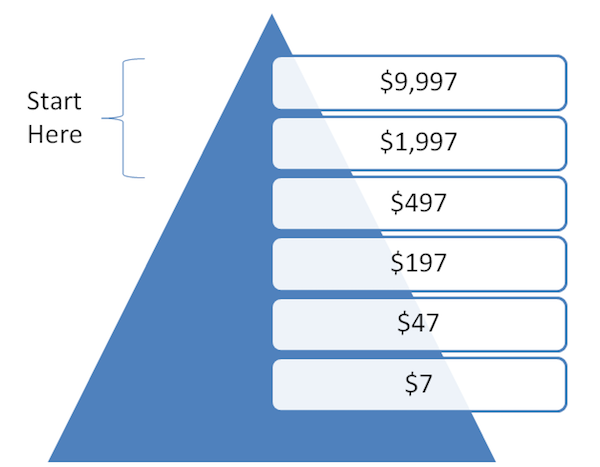
Build a sales funnel in reverse, starting with higher prices.
You’ve seen a sales funnel, right? A company entices you with a freebie, then they offer you something cheap but irresistible, and then they gradually sweet talk you into buying more and more expensive stuff. It’s a tried and true marketing tactic, and you should absolutely build a sales funnel for your blog.
What you might not know is you should build it in reverse.
A lot of bloggers launch a cheap
e-book as their first product, and then they get frustrated when they don’t make much money. Here’s why: the real profit is at the end of the funnel, not the beginning.
Selling e-books is fine and dandy if you have half a dozen more expensive products to offer your customer afterwards, but it’s downright silly if you don’t. You’re much better off creating and selling the expensive product first, and then gradually building cheaper and cheaper products.
When you do have some less expensive products to sell, you can offer those to new people first, safe in the knowledge that you have something more profitable up your sleeve to sell them later.
Here at Smart Blogger, our products cost $9,997, $1,997, and $997, $497, $197, and $47. We started on the expensive side first, and we gradually worked our way down. It’s been much, much more profitable this way.
Lesson #4: There’s No Such Thing As a “Cheap” Market
“But Jon,” I can hear you spluttering. “I can’t sell a $10,000 product! My customers don’t have that much money.”
My response: you’re 98% right. Unless you’re selling exclusively to multimillionaires, the vast majority of your customer base won’t be able to afford premium products, but what’s interesting is it doesn’t matter. Often, you can make more money selling to the 2% than you can to the entire 98% combined.
For instance, our $10,000 product is a year-long coaching program for bloggers — a group that’s not exactly known for their wealth, but I always fill all ten spots within minutes of opening the program. Here’s why: the last time we opened it, I notified 40,000 bloggers. 2% of 40,000 writers is 800 people. By only accepting 10, I’m creating a situation of extreme scarcity.
You can do the same thing, even if your list is much smaller. If you have 100 subscribers, chances are two of them might be willing to buy premium products or services from you, and those two will often pay you more money than the other 98 combined.
And let me be clear…
I’m not saying you have to charge $10,000. We actually make even more money from our $2000 product than we do the $10,000 one:
The point is, most people are afraid to charge more than $200 for a class, believing that’s all people can afford, but it’s just not true. Every market has customers who are and willing to pay for a premium experience. Give them one.
Just be aware… higher prices demand bigger promises. Let me explain.
Lesson #5: The Price Depends on the Promise
Let’s go back to the example of the $10,000 coaching program. How on earth did I get people to pay me that much money?
It’s not because they were stupid. They didn’t get one of my emails and say, “Oh, look honey, this is a fabulous opportunity to throw our money away. Let’s give this good-looking fellow $10,000 just for the hell of it.”
On the contrary, they expected a lot of me. In exchange for that $10,000, I promised to help them launch their blog from scratch and get their first 10,000 email subscribers in only 12 months.
That’s one hell of a promise. Just to put a dollar value on it, you could probably sell a blog with 10,000 subscribers for at least $100,000 in most markets. So, I was essentially promising them $100,000 of value in exchange for only $10,000.
This, my friend, is one of the fundamentals of business.
If you want to charge high prices, you absolutely can, but you must make big promises. Similarly, if you want to charge low prices, you absolutely can, but you must make small promises. In either case though, the value of the promise should be at least 10X the price.

The value of the promise should be at least 10X the price.
For instance, we have a guest blogging course that retails for $497. In exchange, we promise to help students get featured on a big blog or magazine like The Huffington Post or Forbes. I think it’s fair to say that exposure is worth $5,000 to the right person. So, the product sells easily and well.
Not to say everything is sunflowers and daffodils here, though. In fact, there are are two easy ways to screw up:
- Charging high prices but making small promises (result: the product doesn’t sell well, and you waste a ton of time).
- Charging low prices but making big promises (result: lots of customers, but you make no profit).
There’s a rumor floating around that I’ve made each of those mistakes on multiple occasions. Some people also say I have to be repeatedly reminded about the graph above, lest I slip up and nearly bankrupt the company (again).
But come on, who are you going to believe?

No, in all seriousness, I learned all of these lessons the hard way. If you’re wondering how to price your product or service, you’d be wise to heed my words.
Oh, and a few final points before we move on:
- Needless to say, you should only make promises you can actually fulfill. Anything less is unethical.
- If people immediately think you’re full of shit upon hearing your promise, then you’re in trouble. In my opinion, this is what marketing is really about: getting people to trust you when you say you can help them. The better you are at it, the more money you’ll make.
- In the above graph, “value” refers to how much the customer values what you’re promising them, not your own personal value. For instance, I personally think my guacamole is worth $10,000 a bowl, but none of my friends agree with me, so I’m forced to give it to them for free. Bastards.
Also, I’m skipping a lot of other important topics like price testing, competition, and economics, but in my opinion, none of those things are even worth considering until you know the answer to this one simple question:
What can I offer people that’s worth 10X what I charge?
Answer that, and you’ll at least be headed in the right direction.
And the best part?
We get paid for it. It’s our job.
I just wish more people knew it was a viable career. Let’s change that, shall we?